Truth and Transformation with Fiona Kanagasingam
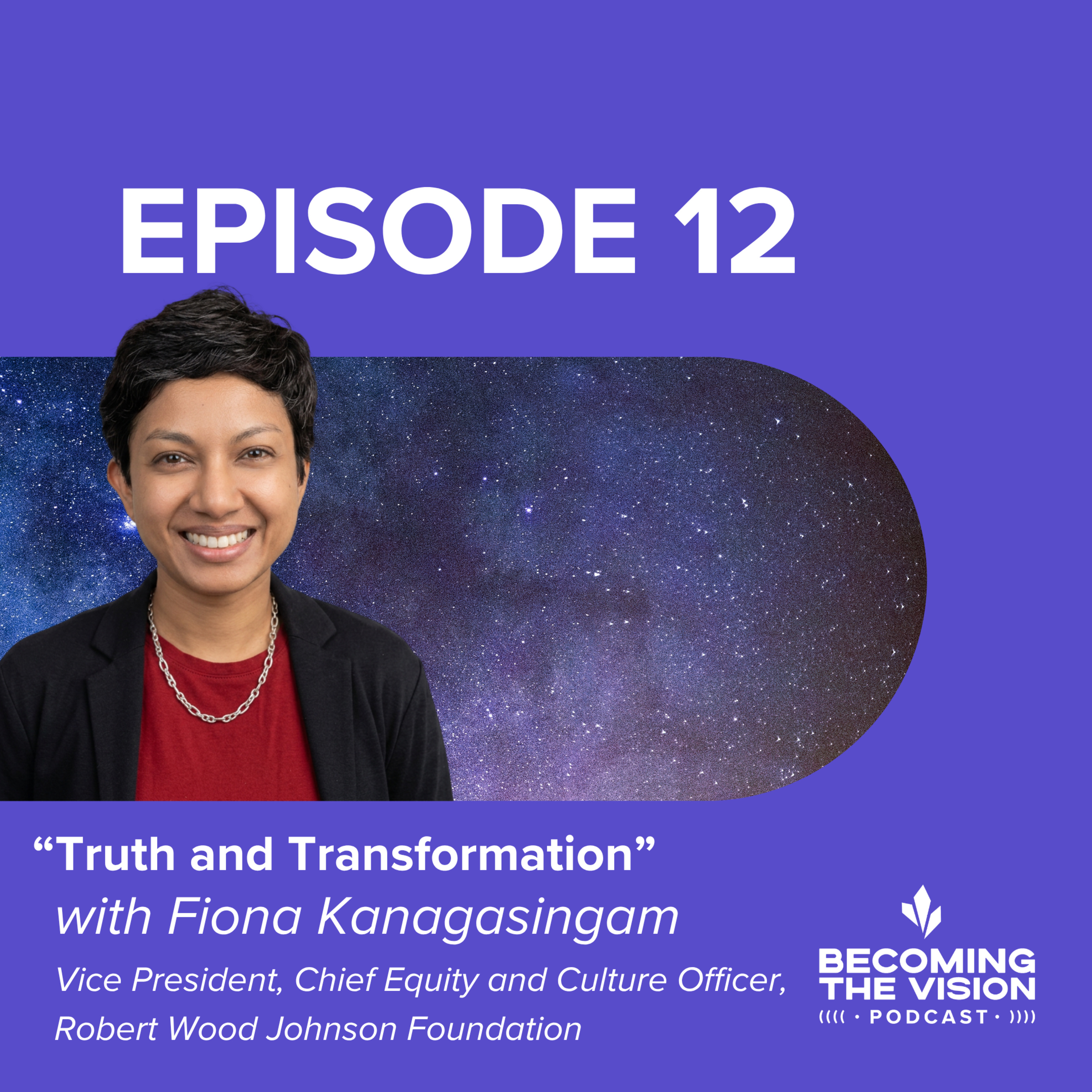
How do institutions move from intention to transformation?
In our latest conversation on Becoming the Vision, Fiona Kanagasingam, Vice President and Chief Equity & Culture Officer at the Robert Wood Johnson Foundation, joins us for a rich conversation about power, institutional change, and what it takes to build toward health equity.
Fiona shares how her own journey—from growing up in post-colonial Singapore to finding an intellectual grounding in Black feminist thought—shaped the way she understands power, privilege, and transformation.
She also takes us inside RWJF’s Truth, Repair, and Transformation process, which is examining how the Foundation originated, grew, distributed its wealth, and continues to be shaped by its institutional history.
Together, we explore why transformation requires working across the whole institution—not only grantmaking or staff culture—and what it means to build the will, skill, relationships, and structures necessary for change to endure.
Fiona also reflects on the tension that can accompany transformation, the importance of organizing inside institutions, and why understanding the past can expand our agency to make different choices in the present.
It’s a conversation about what becomes possible when institutions are willing to see themselves more clearly—and build differently as a result.
--
In this episode
How do institutions move from intention to transformation? In our latest conversation on Becoming the Vision , Fiona Kanagasingam, Vice President and Chief Equity & Culture Officer at the Robert Wood Johnson Foundation, joins us for a rich conversation about power, institutional change, and what it takes to build…
Key questions
Key takeaways
- Transformation requires working across the entire institution, not just in grantmaking or staff culture.
- Understanding the past can expand our agency to make different choices in the present.
- Building the will, skill, relationships, and structures necessary for change is crucial for transformation.
- The tension accompanying transformation highlights the importance of organizing inside institutions.
What does Fiona Kanagasingam discuss in this podcast episode?
Fiona Kanagasingam discusses institutional change, power dynamics, and building towards health equity, drawing from her personal journey and professional experiences.
What is the Truth, Repair, and Transformation process at RWJF?
The Truth, Repair, and Transformation process at RWJF involves examining the foundation's origins, its distribution of wealth, and how its history continues to shape its present and future.
Why does transformation require action across the whole institution?
Transformation requires action across the whole institution to ensure changes endure beyond grantmaking or alterations in staff culture, impacting every facet of the institution.
How can understanding the past influence present choices according to the episode?
Understanding the past can expand our agency to make different choices in the present by revealing historical influences and patterns that can inform future decision-making.
What are the keys to sustainable institutional change?
Keys to sustainable institutional change include building the will, skill, relationships, and structures necessary to maintain and support transformation initiatives.